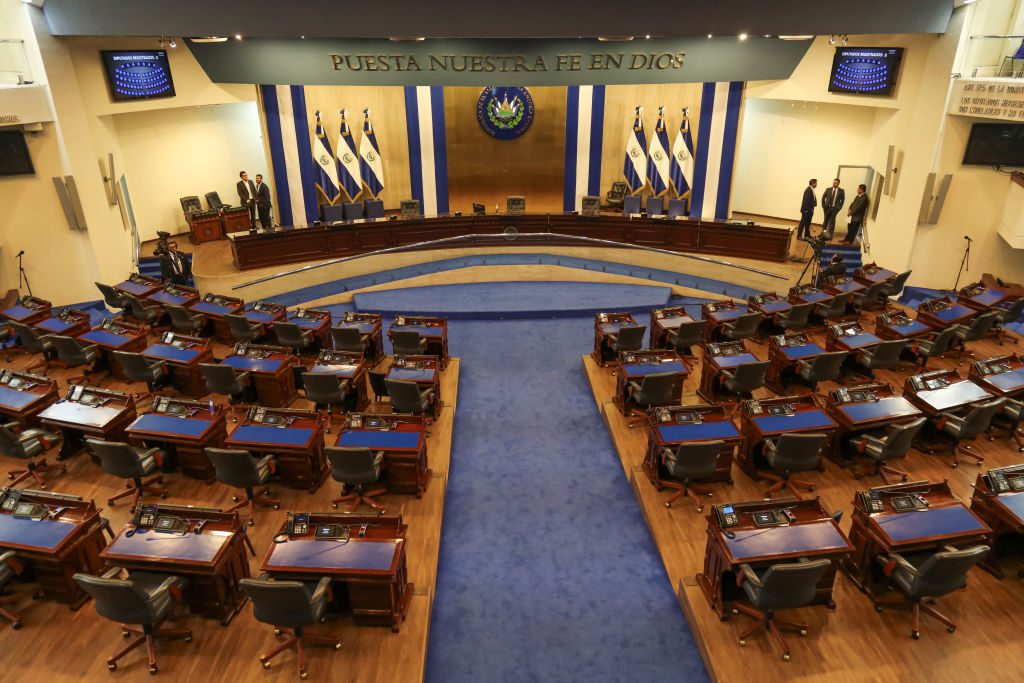
El Salvador, a nation that has often navigated a complex path towards democratic stability, is currently undergoing a series of profound el salvador legal reforms that observers fear are systematically dismantling its democratic foundations and eroding fundamental human rights. These legislative changes, particularly those impacting the constitution and the criminal justice system, paint a concerning picture of a government rapidly consolidating power, with potentially dire consequences for its citizens and the rule of law.
The trajectory, marked by swift legislative action and a declared state of emergency, suggests a departure from established international norms and a weakening of the institutional checks and balances vital for a functioning democracy. This article delves into the specifics of these reforms, examining how they jeopardize the rights of individuals, particularly young people, and challenge El Salvador's commitment to democratic principles.
The Alarming Erosion of Constitutional Safeguards
One of the most critical and concerning changes implemented in El Salvador is the ratification of the amendment to Article 248 of the country's Constitution. This particular amendment, now passed, removes a crucial democratic safeguard: the requirement for constitutional amendments to be approved by two separate legislative assemblies. Historically, this two-step approval process served as a vital institutional barrier, ensuring that any fundamental changes to the nation's foundational legal document underwent extensive deliberation, public discourse, and cross-temporal consensus.
The removal of this requirement effectively creates a fast-track path to constitutional alteration. As noted by Ana Piquer, Americas director at Amnesty International, this measure carries "a worrying risk of further erosion of human rights in El Salvador." It drastically minimizes the space for due deliberation and, crucially, public participation. In a context where the independence of the judiciary and the right to a fair trial have reportedly been systematically eroded, this expedited process could easily pave the way for additional reforms that further diminish the human rights of the population.
This el salvador legal reform directly facilitates the consolidation of executive power without adequate checks and balances. Since May 2021, the ruling party, with its absolute control over the legislative branch, has actively pushed through reforms that have demonstrably weakened access to justice, dismantled accountability mechanisms, and suspended human rights under an ongoing state of emergency. The ability to now unilaterally amend the Constitution without the historical cooling-off period of a second legislative review signifies a dangerous concentration of power, potentially allowing for swift, unchallenged shifts in the nation's legal and political landscape.
Criminal Justice Reforms: A Retreat from International Standards
Beyond constitutional changes, El Salvador's Legislative Assembly approved significant criminal law reforms on February 12, 2025, that civil society organizations and international human rights bodies warn will exacerbate human rights abuses, particularly against individuals under 18. These reforms come amidst a state of emergency that has already seen a significant number of detentions involving children and adolescents.
Impact on Juveniles and the Principle of Rehabilitation
Perhaps the most alarming aspect of these criminal justice reforms concerns the treatment of minors. Amendments to the Juvenile Criminal Law now permit the transfer of adolescents convicted of organized crime offenses to adult prisons, under the administration of the General Directorate of Penal Centres. This move is a direct violation of international standards, including the Convention on the Rights of the Child (CRC) and the Beijing Rules. Both frameworks unequivocally state that children in conflict with the law should receive differentiated treatment focused on rehabilitation and reintegration, rather than punitive imprisonment alongside adults.
Placing young people in adult facilities exposes them to heightened risks of violence, abuse, and further criminalization, severely undermining any prospect of rehabilitation. It is a punitive approach that fails to acknowledge the developmental stage of adolescents and the potential for positive change. Instead of addressing the root causes of their involvement in crime, these reforms opt for a measure that isolates and potentially hardens them. For more on this critical issue, read El Salvador's Reforms: Youth Justice & Human Rights Crisis.
Prisons Law and the Illusion of Protection
Further reforms to the Prisons Law allow for the creation of special sections within prisons for children under 18 and adults up to 21 years of age. While superficially appearing to offer a degree of separation, these provisions fall short of guaranteeing an adequate system of protection and reintegration. Simply separating by age groups does not inherently protect against violence or abuse, nor does it guarantee access to essential education or rehabilitation programs.
International standards dictate that the deprivation of liberty should always be a measure of last resort, applied only in exceptional circumstances. These reforms, by facilitating the mass incarceration of young people without robust protective and rehabilitative frameworks, directly breach this fundamental principle. They place thousands of young people at heightened risk within a system that appears increasingly punitive rather than rehabilitative.
Undermining Reintegration: The Organized Crime Law
The amendments to the Law on Organized Crime deliver another blow to human rights by eliminating access to prison benefits, such as conditional release, for individuals convicted of offenses specified in the law, irrespective of whether they are under 18 years of age or adults. This specific el salvador legal reform profoundly undermines the possibility of social reintegration, contravening internationally recognized standards like the Mandela Rules and the American Convention on Human Rights.
Denying pathways to conditional release and reintegration creates a cycle of perpetual punishment, making it incredibly difficult for individuals to re-enter society as productive citizens. Such measures often lead to higher recidivism rates and fail to address the underlying societal issues contributing to criminal activity. A justice system that offers no hope of redemption or reintegration is not only harsh but ultimately less effective in fostering long-term public safety. For a deeper dive into these breaches, refer to El Salvador Legal Shifts: Breaching International Standards.
The Broader Implications for Democracy and Human Rights
The collective impact of these constitutional and criminal justice reforms points towards a dangerous trend in El Salvador: the systematic dismantling of democratic safeguards and the erosion of fundamental human rights. The ability to amend the constitution with less scrutiny, coupled with a criminal justice system that increasingly prioritizes punitive measures over rehabilitation and due process, creates an environment where executive power can operate with fewer constraints.
The reliance on mass incarceration, particularly of young people, as a primary security strategy, without corresponding investments in rehabilitation, education, and social programs, is a shortsighted and ultimately unsustainable approach. It risks creating a generation of individuals alienated from society and trapped in a cycle of marginalization.
Organizations like Amnesty International have consistently called on Salvadoran authorities to grant international human rights bodies access to prison centers and for the international community to establish independent monitoring mechanisms to document the unfolding prison crisis. These calls highlight the critical need for external oversight in a system where internal checks and balances appear to be weakening.
Practical Insight: For El Salvador to genuinely address its security challenges, it must move beyond purely punitive measures. A robust security strategy requires not only law enforcement but also comprehensive social programs, educational opportunities, mental health support, and rehabilitation services. Reversing these reforms and ensuring adherence to international human rights standards is not merely a legal obligation but a strategic imperative for long-term peace and stability.
Conclusion
The recent el salvador legal reforms represent a significant crossroads for the nation. By altering its foundational constitution to allow for unchecked legislative power and by implementing criminal justice reforms that undermine rehabilitation and due process, El Salvador is charting a course that risks isolating itself from international human rights norms and undermining its own democratic future. The shift towards mass incarceration, particularly for juveniles, and the denial of pathways to social reintegration are deeply troubling. It is imperative that El Salvador urgently reverses these reforms and commits to building a justice system that aligns with international human rights standards, ensuring that its security policy upholds, rather than erodes, the protection of its people's rights.